Digital ID Overview

overview_background_image

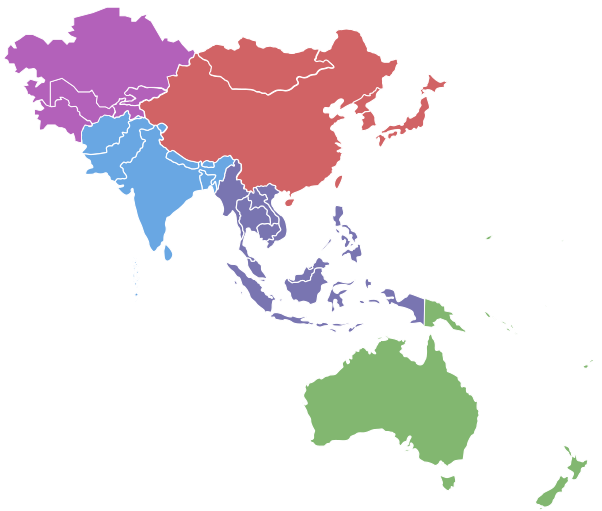
Digital identity systems have been introduced at varying stages of development across the five sub-regions over the past decade. South Asia has the longest-running large-scale systems with India’s Aadhaar (operational since 2009),[14] Bangladesh’s NID (rolled out in 2007/2008)[15] and Bhutan’s National Digital Identity, launched on 13 October 2023, billed as the first national-scale SSI system in Asia and globally.[16]

The case of India illustrates why the distinction between legal identity and citizenship matters. Although the Aadhaar Act, 2016 expressly states that Aadhaar is not proof of citizenship, in practice Aadhaar has become deeply embedded in access to subsidized food, school enrollment and welfare.[17] For those unable to enroll in Aadhaar, often due to lack of documentation, literacy, or education, it means exclusion from access to basic rights such as welfare or work. Aadhaar has reinforced existing structural inequalities, particularly for marginalized groups such as stateless persons, migrants, and those lacking legal identity documents. This demonstrates that even when a digital ID system is not legally tied to citizenship, its integration into welfare and governance systems can produce citizenship-like effects of inclusion and exclusion.[18]

Digital identity development across Pacific Island countries remains at an early stage,[19] with only Australia, New Zealand, and Vanuatu having operational systems, each differing in design and function. Australia’s myID and New Zealand’s RealMe are voluntary, service-oriented systems that enable secure access to government services but do not serve as proof of citizenship, whereas Vanuatu’s system combines a mandatory national ID card with a voluntary E-ID that functions as a foundational legal identity. Most other countries are in planning or early implementation phases: Fiji has announced a comprehensive system expected within three years; Kiribati and the Marshall Islands are advancing digital ID through broader digital government initiatives with external support; Papua New Guinea has begun rolling out SevisPass;[20] Samoa has enacted enabling legislation but has not yet implemented its system; Tonga and Nauru are progressing through development strategies and international support; and smaller states like Tuvalu have articulated digital ambitions but face uncertain implementation timelines.

East Asian digital ID systems, across Hong Kong, China, Mongolia, South Korea, Taiwan, and Japan, generally function as voluntary, government-developed platforms (via apps or websites) that enable access to public and private e-services while remaining distinct from foundational legal identity documents such as national or resident ID cards.[21] Japan is a notable exception, as its My Number Card integrates both foundational and functional roles through embedded electronic certificates for authentication and digital signatures. Although enrollment is formally voluntary, digital IDs are becoming increasingly necessary in practice as governments link them to essential services, as seen in Mongolia’s E-Mongolia platform and Japan’s My Number system. These systems are typically accessible to citizens and legal residents and are tied to existing identity or residency registries, meaning they do not inherently establish citizenship status; however, stateless individuals are often excluded due to documentation requirements. Implementation has largely been state-led with limited public participation, and there is little evidence of systematic engagement with inclusion or anti-discrimination experts in system design.

Central Asian countries are progressively implementing digital identity systems as part of broader digital governance strategies.  Kazakhstan and Kyrgyzstan operate fully integrated foundational systems linked to national identity registers, while Tajikistan and Uzbekistan use more functional platforms focused on authentication and service access (IMZO and OneID/eID respectively), and Turkmenistan remains in the planning stage.[22] Across the region, digital ID systems typically build on existing national ID frameworks rather than replacing them, making legal identity documents a prerequisite for access. These systems are increasingly central to accessing public services such as social benefits, healthcare, taxation, and banking, and while not always legally mandatory, they are becoming effectively unavoidable in practice. Access is generally limited to citizens and legally documented residents, excluding undocumented stateless persons, though some initiatives (such as Kazakhstan’s QazETA) aim to expand access for foreign nationals. Overall, digital ID development has been largely state-driven with support from international actors, with limited evidence of public participation or inclusion of perspectives related to discrimination, statelessness, or minority rights.

Eight of eleven Southeast Asian countries have operational or near-operational digital ID systems. Among them,  Cambodia, Laos, and Timor-Leste are still developing digital ID systems as part of their broader digital government initiatives.[23] These systems generally build on existing civil registration frameworks and function either as foundational identity systems linked to population registries (e.g., Indonesia, Philippines, Viet Nam) or as functional authentication platforms dependent on existing IDs (e.g., Singapore, Malaysia, Thailand, Laos). Digital IDs are increasingly integrated into service delivery across sectors such as healthcare, banking, and social protection, and in some countries are becoming effectively mandatory for accessing key services. Access is typically limited to citizens and documented residents, excluding many stateless persons due to documentation requirements. 

Digital ID systems across the region are predominantly government-led, with limited structured public consultation during design and implementation. There is little publicly documented evidence of systematic engagement with experts on discrimination, statelessness or minority rights. Notable partial exceptions include Malaysia, which conducted public consultation before launching its National Digital ID Framework. Australia and New Zealand also have multi-stakeholder governance frameworks under their respective Digital ID statutes.

Table 2: Status of digital ID systems across Asia-Pacific

Sub-RegionCountryDigital ID systemStatusFunctional/ FoundationalRequires citizenship for enrolment?Accessible to stateless personsEffectively mandatory to access services
Central AsiaKazakhstaneGov Mobile; digital ID linked to national registersOperationalFoundationalGenerally yes; some access routes for foreign nationalsLimited  Increasingly yes
KyrgyzstanTundukOperationalFoundationalGenerally yes or lawful residenceLimitedIncreasingly yes
TajikistanIMZOOperationalFunctionalGenerally yes or lawful residenceLimitedFor some services, increasingly yes
TurkmenistanPlanned USIA / no confirmed operational national digital IDPlannedN/A N/ANo clear accessNo
UzbekistanOneID / eIDOperationalBoth Foundational and FunctionalGenerally yes or lawful residenceLimitedIncreasingly yes
East AsiaChinaInternet IDOperationalFunctionalCitizens and some legal residents through existing registriesNoIncreasingly yes for online services
Hong KongiAM SmartOperationalFunctionalHong Kong ID holders / residentsNoNot universally, but increasingly important
JapanMy Number CardOperationalBoth foundational and functionalCitizens and legal residentsYes; depending on residence statusIncreasingly yes
MongoliaE-MongoliaOperationalFunctionalCitizens and some residentsNoIncreasingly yes
North KoreaNo known public national digital ID systemN/AN/AN/AN/ANo clear evidence
South KoreaMobile ID / digital government identity toolsOperationalFunctionalCitizens and registered foreign residents in some systemsNo  Increasingly yes
TaiwanTW DIW / TW FidO / Citizen Digital CertificateOperationalFunctionalNationals and some legal residents depending on credentialYes;  through Alien Citizen Digital Certificate IC Card Increasingly important for e-services
South AsiaAfghanistane-TazkiraOperationalFoundationalGenerally tied to citizenshipNo Important for many services
BangladeshNational ID card (NID)OperationalBoth foundational and functionalGenerally citizensNoLargely yes
BhutanNational Digital Identity (NDI)OperationalFoundationalYes, citizensNoEmerging, increasingly important
IndiaAadhaarOperationalFunctionalResidents can enroll (as per the law)NoYes for many services in practice
MaldiveseFaasOperationalFoundationalCitizens; foreigners may register for some use with passport or work permitNoIncreasingly yes
NepalNational IDOperationalFunctionalGenerally citizensNoIncreasingly yes
PakistanCNIC / NADRA digital identity ecosystemOperationalFoundationalGenerally citizensNo Yes for many services
Sri Lankae-NICOperational / rolloutFoundationalGenerally citizensNoIncreasingly yes
Southeast AsiaBruneiBruneiIDOperationalHybridGenerally citizens and lawful residents depending on serviceStateless with PR: Yes. Stateless without PR: NoIncreasingly yes
CambodiaCamDigiKey / IPISOperational / developingHybridGenerally citizens / documented residents depending on platformNo clear accessGrowing but not universal
IndonesiaIKDOperationalHybridGenerally citizens with existing civil registrationLimitedIncreasingly yes
LaosGov-X / E-IDOperational / developingFunctionalGenerally citizens / documented residentsNoGrowing
MalaysiaMyDigital IDOperational / rolloutFunctionalGenerally citizens and documented residents in some usesNoNot yet universal, but expanding
MyanmarUID Smart CardOperational / rolloutHybridGenerally tied to citizenship or documented statusNo clear accessIncreasingly important in administration
PhilippinesPhilSysOperationalFoundationalCitizens and resident aliens in some casesNo clear accessIncreasingly yes
SingaporeSingpass / National Digital IdentityOperationalFunctionalCitizens, permanent residents, and many pass holdersLimited; Stateless with PR: potentially yes Yes for many services
ThailandThaID / DGAOperationalFunctionalGenerally citizens; some services tied to Thai IDNo Increasingly yes
Timor-LesteUID via Dalan ba DigitalPilot / rolloutPlanned foundational systemNot yet clearAspirational — UID Strategic Plan explicitly includes stateless persons, refugees, and those without ID, but system not yet implementedNo clear evidence
VietnamVNeIDOperationalFoundationalCitizens; some foreign residents through tiered accessLimited; stateless persons of Vietnamese origin can obtain Identity Certificates and potentially e-ID Increasingly yes
The PacificAmerican SamoaNo standalone territory-wide digital ID identifiedNone identifiedN/AN/AN/ANo
AustraliamyIDOperationalFunctionalNo, available beyond citizens subject to identity requirementsNo clear accessIncreasingly important for government/tax services
FijiPlanned national digital ID / broader digital government initiativesPlannedPlanned foundational / hybridN/AN/ANo
GuamNo standalone territory-wide digital ID identifiedNone identifiedN/AN/AN/ANo
KiribatiDigital ID under broader digital government initiativesPlannedPlanned / not yet clearNot yet clearNot yet clearNot yet
Marshall IslandsDigital ID under broader digital government initiativesPlannedPlanned / not yet clearNo clear evidenceNo clear evidenceNo clear evidence
MicronesiaNo known operational national digital ID systemNone identifiedN/AN/AN/ANo
NauruDigital ID development under international supportPlannedPlanned / not yet clearNo clear evidenceNo clear evidenceNo clear evidence
New ZealandRealMeOperationalFunctionalNo, but requires recognised identity documents; open to citizens and some residentsLimited unless person holds underlying recognised documentsImportant for many services, but not universally mandatory
Northern Mariana IslandsNo standalone territory-wide digital ID identifiedNone identifiedN/AN/AN/ANo
PalauNo general national digital ID; Digital Residency / RNS for non-citizens onlyLimited / non-citizen programme onlyFunctional No, aimed at non-citizensNo clear evidenceNo clear evidence
Papua New GuineaSevisPassRollout / early implementationFoundational / service identityNo clear evidenceNo clear evidenceExpected to become important
SamoaLegal framework adopted; implementation pendingPlannedPlanned foundational / hybridNo clear evidenceNo clear evidenceNo clear evidence
Solomon IslandsNo known operational national digital ID systemNone identifiedN/AN/AN/ANo
TongaDigital ID under development strategy; no full national rollout yetPlannedPlanned / No clear evidenceNo clear evidenceNo clear evidenceNo clear evidence
TuvaluDigital ambitions articulated; no operational national system identifiedPlanned / uncertainPlanned / uncertainNo clear evidenceNo clear evidenceNo clear evidence
VanuatuE-ID / VanuatuIDOperationalFoundationalGenerally citizens and lawful residentsNo clear evidenceImportant for access to services

Law

law_background_image

Domestics Laws and Policy

Across the five sub-regions, most countries regulate digital identity through broader digital governance, civil-registration, electronic-document or electronic-signature laws rather than through a single standalone digital ID statute. 

In South Asia, five countries (Bhutan, India, Nepal, Pakistan, and Afghanistan) have domestic legal or policy frameworks defining digital identity, and these vary widely in scope and substance.[24] Governments generally follow two approaches: either enacting dedicated digital ID laws (as in Pakistan’s 2025 Digital Nation Act) or adapting existing civil registration laws to include digital or biometric elements (as seen in Sri Lanka). Where defined, digital identity is typically understood as a state-issued identifier linking demographic and often biometric data for authentication and service access, though some countries provide clear statutory definitions while others rely on operational or technical descriptions within ID systems like Aadhaar. These differences influence accountability mechanisms, with dedicated laws more likely to include formal grievance redress systems, whereas amended civil registration frameworks offer more limited recourse. Across the region, digital ID systems are closely tied to citizenship: in some countries they directly function as proof of nationality, while in others like India, they do not confer citizenship but still depend on citizenship documentation and effectively act as markers for accessing rights and services.

Across Southeast Asia, ten of eleven countries have legal or policy frameworks governing digital identity, though these vary in scope and structure.[25] Only the Philippines and Viet Nam have adopted dedicated digital ID laws while others rely on broader legal regimes such as civil registration, digital government, or cybersecurity; Laos lacks specific digital ID legislation altogether. Digital identity is generally defined as electronic credentials or authentication systems used to verify individuals and enable secure access to services, and in most countries, it is built on existing civil registration or population databases rather than functioning independently. Unlike South Asia, digital identity is not explicitly defined as proof of citizenship in any country, instead it serves as a marker of legal identity or residency linked to national ID systems. While most countries provide avenues for complaints through general administrative systems or data protection authorities, none has established a dedicated grievance mechanism specifically for digital identity systems.

In East Asia, all six countries examined have legal or policy frameworks governing digital identity, though their approaches differ.[26] China, Japan, and South Korea have recently introduced dedicated digital ID laws or amendments (between 2023 and 2025), reflecting the relatively nascent nature of these regulatory frameworks, while Hong Kong, Mongolia, and Taiwan rely on existing laws (particularly those on electronic signatures, data protection, and cybersecurity) to provide the legal basis for digital ID systems. In countries with dedicated legislation, digital identity is explicitly defined as an electronic authentication system using identifiers or certificates to verify individuals in digital transactions, with examples including China’s “internet number” and Japan’s My Number system. In contrast, countries without specific laws regulate digital ID through broader digital governance frameworks that recognize electronic signatures and set standards for identity verification. Across all six countries, digital ID is not legally linked to citizenship, as systems are designed to be accessible to both citizens and foreign residents based on proof of legal residency rather than nationality.

In the Pacific sub-region, only three countries (Australia, New Zealand, and Vanuatu) have established legal and policy frameworks governing digital identity, while the remaining countries are at early stages of development.[27] Australia and New Zealand provide detailed statutory definitions, framing digital identity as an electronic means of authentication for accessing services and securely sharing personal data, whereas Vanuatu regulates its national ID system through multiple laws without explicitly defining digital identity. All three countries clearly separate digital identity from citizenship status. Samoa and Papua New Guinea have introduced legal or policy frameworks to support future digital ID systems, explicitly defining their structure and clarifying that digital ID does not confer citizenship. The rest of the region, including countries like Kiribati, the Marshall Islands, and Nauru, lacks dedicated legal definitions or frameworks, though some have general electronic transactions laws or national strategies that lay the groundwork for future digital ID implementation.

In Central Asia, digital identity is generally regulated through a mix of laws on identity documents, electronic government, electronic signatures, digital development, and data protection rather than through standalone digital ID legislation.[28] Kazakhstan and Kyrgyzstan are exceptions, having adopted comprehensive Digital Codes that explicitly govern digital identity, biometric authentication, and digital public services, while Tajikistan, Uzbekistan, and Turkmenistan rely on broader legal frameworks such as electronic document and e-government laws, with Turkmenistan still lacking an operational digital ID system. Most countries provide general grievance mechanisms through administrative or data protection channels, but only Kazakhstan has a dedicated system for digital ID complaints, with its Digital Code mandating oversight of biometric data use and enforcement through inspections and penalties.

Across all sub-regions, domestic legal frameworks do not establish a direct statutory linkage between digital ID and citizenship. Both citizens and, in some countries, foreign residents can in principle access digital ID provided they have documentation proving legal residency. In practice, however, the requirement to possess foundational legal identity documents as a prerequisite for digital ID enrollment creates an indirect link to citizenship, since stateless persons and undocumented migrants typically lack such documents.

Dedicated complaint mechanisms remain rare. The Kazakhstan Digital Code mandates ministry-level review of complaints concerning biometric authentication and data processing,[29] and Pakistan’s NADRA operates a centralized complaint-management system;[30] most other countries rely on general administrative complaint pathways, data-protection authorities or agency help desks.

Table 3: Domestic legal framework for digital ID across Asia-Pacific

Sub-RegionCountryStatute for Digital ID system (yes/no)Statute details (if any)Other laws governing digital IDAvailable grievance mechanism
Central AsiaKazakhstanYesDigital Code of the Republic of Kazakhstan (signed 9 January 2026)Laws on e-government, electronic documents and personal data protection; provisions on biometric authentication and digital public servicesDedicated oversight and complaint provisions under the Digital Code; general administrative and data-protection complaint channels
KyrgyzstanYesDigital Code of the Kyrgyz Republic (signed August 2025)Laws on e-government, electronic documents and personal data protectionGeneral administrative complaint mechanisms
TajikistanNoE-government and e-signature laws; Law on Personal Data 2018General administrative complaint mechanisms
TurkmenistanNo– Laws on identity documents and e-government; personal-data frameworkGeneral administrative complaint mechanisms
UzbekistanNoE-government and e-signature laws; personal-data legislation regulating biometric databases linked to identity systemsGeneral administrative complaint mechanisms
East AsiaChinaYesInternet ID Measures (in force 15 July 2025)Personal Information Protection Law; Cybersecurity Law; Data Security Law; electronic-signature and e-government regulationsGeneral administrative complaint mechanisms
Hong KongNoElectronic Transactions Ordinance; Personal Data (Privacy) Ordinance; sectoral cybersecurity and e-government regulationsComplaints via Privacy Commissioner and general administrative procedures
JapanYesMy Number Act 2013 (as amended)Electronic-signature and PKI laws; Act on the Protection of Personal Information and related regulationsGeneral administrative complaint mechanisms
MongoliaNoE-government and electronic-signature laws; data-protection framework underpinning E-MongoliaGeneral administrative complaint mechanisms
North KoreaNoGeneral identity and administrative laws; no specific digital ID framework identifiedNo clear grievance mechanisms
South KoreaYesResident Registration Act with 2023 Mobile-ID amendmentsPersonal Information Protection Act; electronic-transactions and e-government legislation governing mobile IDComplaints via data protection authority and administrative channels
TaiwanNoSectoral electronic-signature, data-protection and cybersecurity laws supporting TW DIW, TW FidO and Citizen Digital CertificateComplaints through data protection authorities and general administrative mechanisms
South AsiaAfghanistanNoNID statutes and civil-registration laws governing e-Tazkira; broader e-government frameworkNo clear grievance mechanisms
BangladeshNoNID statutes and civil-registration laws; ICT and e-government framework; sectoral data-governance instrumentsGeneral administrative complaint mechanisms
BhutanYesNational Digital Identity Act 2023Civil-registration and citizenship laws; ICT and cybersecurity framework governing the SSI-based NDI systemNDI Act includes explicit safeguards and redress mechanisms; general administrative remedies also available
IndiaYesAadhaar (Targeted Delivery of Financial and Other Subsidies, Benefits and Services) Act 2016Civil-registration legislation; IT and data-governance framework relating to digital public infrastructure and authenticationGrievance mechanisms under the Aadhaar framework plus general administrative routes
MaldivesNo– Sectoral e-government and ICT regulations; identity and civil-registration laws underpinning eFaasGeneral administrative complaint mechanisms
NepalNoNational ID (NID) statute; civil-registration laws; nationality legislation defining citizenship certificatesGeneral administrative complaint mechanisms
PakistanYesDigital Nation Pakistan Act 2025 NADRA Ordinance and regulations; civil-registration and identity laws; e-government frameworkCentralised NADRA complaint management system and general administrative remedies
Sri LankaNoCivil-registration statutes; regulations enabling e-NIC and biometric registration; ICT lawsGeneral administrative complaint mechanisms
Southeast AsiaBruneiNoSectoral data-protection, e-transactions and civil-registration laws underpinning BruneiIDGeneral administrative complaint mechanisms
CambodiaNoCivil-registration and digital-government laws; sectoral ICT framework supporting CamDigiKey / IPISGeneral administrative complaint mechanisms
IndonesiaNoPopulation Administration Law and implementing regulations; e-government and emerging data-protection frameworkGeneral administrative complaint mechanisms
LaosNo– General ICT and e-transactions laws; civil-registration framework underpinning Gov-X / E-IDGeneral administrative complaint mechanisms
MalaysiaNoNational Registration Act; e-government and data-protection laws forming the basis for MyDigital IDComplaints through data-protection authority and general administrative mechanisms
MyanmarNoCitizenship and registration laws; e-government and ICT framework underpinning UID Smart Card and biometric SIM registrationGeneral administrative complaint mechanisms (in principle)
PhilippinesYesPhilippine Identification System Act (RA 11055, 2018)Civil-registration laws; Data Privacy Act and related regulations governing PhilSys data processingGeneral administrative complaint mechanisms
SingaporeNoNational Registration Act; Personal Data Protection Act; digital-government legislation underpinning Singpass / NDIGeneral administrative complaint mechanisms
ThailandNoCivil-registration and national-ID laws; Digital Government Development Agency legislation underpinning ThaID / DGAGeneral administrative complaint mechanisms
Timor-LesteNoUnique ID Strategy and Dalan ba Digital are policy frameworks; no statuteCivil-registration framework; digital-government strategies and Unique ID Strategic PlanGeneral administrative complaint mechanisms; system still under development
VietnamYesLaw on Identity No. 26/2023/QH15 (in force 1 July 2024)Electronic-transactions and data-protection framework governing ID cards and VNeIDGeneral administrative complaint mechanisms
The PacificAmerican SamoaNoU.S. federal and territorial identity and e-government laws; no separate digital-ID statute identifiedGeneral administrative complaint routes under U.S./territorial system
AustraliaYesDigital ID Act 2024 Privacy Act and related data-governance laws; e-government statutes; Digital ID data standardsMulti-stakeholder governance and complaint pathways under the Digital ID Act plus privacy-regulator oversight
FijiNoCivil-registration and identity laws; digital-government strategies; Digital ID planning documentsGeneral administrative complaint mechanisms
GuamNoU.S. federal and territorial identity and e-government laws; no separate digital-ID statute identifiedGeneral administrative complaint routes under U.S./territorial system
KiribatiNoCivil-registration laws; digital-government / ICT strategies laying groundwork for future digital IDGeneral administrative complaint mechanisms
Marshall IslandsNoCivil-registration laws; digital-government / ICT strategies for future digital IDGeneral administrative complaint mechanisms
MicronesiaNoCivil-registration and identity laws; limited ICT framework; no operational digital-ID statute identifiedGeneral administrative complaint mechanisms
NauruNoCivil-registration and identity laws; ICT strategies; digital-ID development strategiesGeneral administrative complaint mechanisms
New ZealandYesDigital Identity Services Trust Framework Act 2023 Privacy Act and related statutes; e-government laws; trust-framework rules for accredited providersComplaints via accredited providers and the Privacy Commissioner; statutory oversight of the trust framework
Northern Mariana IslandsNoU.S. federal and territorial identity and e-government laws; no separate digital-ID statute identifiedGeneral administrative complaint routes under U.S./ territorial system
PalauNoLegal framework for Web3-based Digital Residency Program; general ICT and identity lawsGeneral administrative complaint mechanisms
Papua New GuineaNoDigital ID Policy 2025; civil-registration and identity laws; e-government strategiesGeneral administrative complaint mechanisms
SamoaYesNational Digital Identification Act 2024Civil-registration and identity laws; ICT strategies; Act clarifying that digital ID does not confer citizenshipGeneral administrative complaint mechanisms
Solomon IslandsNoCivil-registration laws; ICT strategies; early digital-ID discussionsGeneral administrative complaint mechanisms
TongaNoNationality Identity Card Act; Civil-registration and identity laws; planning documents for digital IDGeneral administrative complaint mechanisms
TuvaluNoCivil-registration laws; national digital strategies; digital ambitions articulatedGeneral administrative complaint mechanisms
VanuatuNoCRIM Act 2021; VNI Act; other laws regulating VanuatuID and E-IDGeneral administrative complaint mechanisms

Data Protection

Data-protection frameworks vary widely. All East Asian countries except North Korea have established data protection and privacy laws, generally providing safeguards for the collection, processing, and use of personal data within digital ID systems, including consent requirements, purpose limitation, and security obligations.[31] China, Taiwan, Mongolia, and South Korea maintain relatively comprehensive frameworks, with China’s Personal Information Protection Law and South Korea’s Personal Information Protection Act offering strong protections for sensitive data such as biometrics, alongside enhanced rights and oversight mechanisms. However, most countries lack explicit restrictions on government access to personal data collected through digital ID systems, as seen in Hong Kong’s framework. Despite robust legal regimes in some cases, concerns persist across the sub-region regarding surveillance risks, data breaches, and the growing use of AI, particularly in China’s state-controlled digital identity infrastructure, while North Korea remains an outlier with no data protection laws and pervasive state surveillance. 

Across the Pacific, most countries lack both digital ID systems and corresponding data protection frameworks, with only seven (Australia, Kiribati, New Zealand, Palau, Papua New Guinea, Samoa, and Vanuatu) having some form of legal or policy safeguards.[32] Among these, Australia and New Zealand provide relatively comprehensive privacy regimes, though gaps remain, such as the absence of mandatory encryption and limited data erasure rights. Samoa and Vanuatu have more recent laws addressing data retention, security, and general safeguards, but weaknesses persist, particularly around biometric data regulation and government access. Papua New Guinea and Kiribati maintain broader data governance frameworks that only partially address digital ID concerns. Palau is notable for aligning its Digital Residency Program with ISO 27001 standards. Overall, uneven regulatory coverage and limited safeguards raise growing concerns about privacy risks, data misuse, and potential surveillance across the region.

In South Asia, the picture is uneven.[33] Bhutan, India, Nepal, and Sri Lanka have data protection laws or policies, but only Bhutan’s National Digital Identity framework includes explicit, built-in safeguards for digital ID systems, such as user consent, encryption, and controlled access to biometric data. In contrast, India, Nepal, and Sri Lanka lack specific protections like mandatory encryption or robust safeguards governing the storage, use, and access to digital ID data. Across the region, significant concerns persist around privacy, surveillance, and exclusion, compounded by major data breaches in countries like India, Bangladesh, and Pakistan. Risks of state surveillance are particularly acute in contexts such as the Maldives, where digital ID metadata may be used to monitor individuals, and Afghanistan, where biometric data from e-Tazkira systems may be misused. Civil society in Sri Lanka and elsewhere has also warned that expansive digital ID systems could enable mass surveillance in the absence of strong legal protections.

Seven of eleven Southeast Asian countries (Malaysia, Singapore, Indonesia, Thailand, the Philippines, Viet Nam, and Brunei) have data protection or privacy laws that regulate personal data used in digital ID systems, generally requiring consent, imposing security measures, and offering complaint and enforcement mechanisms.[34] However, Cambodia, Laos, Myanmar, and Timor-Leste lack comprehensive frameworks for digital ID, heightening risks of privacy violations, surveillance, and data misuse; with Myanmar’s UID Smart Card and biometric SIM registration schemes drawing particular concern. Across the sub-region, recurring problems include large-scale data breaches, expanded state surveillance powers, centralized population databases, and exclusion of those without digital credentials, illustrated by major leaks in Malaysia and the Philippines, cybersecurity and spyware abuses in Viet Nam and Singapore, and extensive surveillance using biometric and digital ID infrastructures in Myanmar, Thailand, and Brunei, often targeting migrants, refugees, stateless communities, LGBTI persons, and human rights defenders. 

All Central Asian countries have personal data protection or privacy laws that regulate the collection, processing, and protection of personal data, including biometrics used in digital ID systems.[35] These frameworks generally require lawful and purpose-limited processing, consent, and security measures. In Kazakhstan, Kyrgyzstan, Uzbekistan, and Turkmenistan, biometric data is explicitly treated as sensitive and subject to heightened safeguards. Tajikistan’s 2018 Law on Personal Data sets out general protections but does not create a distinct higher-protection regime for biometrics. None of the five countries, however, restrict government access to personal data collected through digital ID, allowing state agencies broad access for national security, law enforcement, and administrative purposes. This contributes to ongoing concerns about privacy, surveillance, and data security, particularly in relation to large biometric databases and integrated identity platforms. Tajikistan’s and Uzbekistan’s laws, for example, require security measures but stop short of mandating encryption of digital ID and biometric data, despite documented risks.

Common concerns across the region include government surveillance and access to personal data, privacy risks from centralised biometric databases, breaches, and exclusion from public services for individuals without digital ID credentials. Government agencies are generally permitted to access data collected through digital ID systems for national-security, law-enforcement or public-administration purposes; none of the sub-regions has established clear legal prohibitions on such access. The most extensively documented case of digital ID related data misuse concerns Rohingya refugees. Human Rights Watch reported in June 2021 that, between 2018 and 2021, the Bangladeshi government submitted approximately 830,000 names with biometric data to Myanmar authorities, drawing on data UNHCR had collected during refugee registration without obtaining specific informed consent for that onward transfer.[36] Surveillance concerns connected to digital ID and biometric systems have also been documented in China, Thailand, Singapore, Viet Nam, Maldives and Afghanistan.

Table 4: Domestic legal framework for data protection and privacy across Asia-Pacific

Sub-RegionCountryComprehensive data-protection / privacy law? (yes/no)Biometric data treated as sensitive?Notable gaps/risks for digital ID
Central AsiaKazakhstanYesYesGovernment access remains broad; risks from integrated biometric databases persist.
KyrgyzstanYesYesLegal safeguards exist, but government access remains broad and oversight is limited in practice.
TajikistanYesNoLaw on Personal Data provides general safeguards, but biometrics are not given a separate higher-protection regime; no clear limits on state access. 
TurkmenistanYesYesBiometric data is treated as sensitive, but there are no clear restrictions on state access and transparency is limited. 
UzbekistanYesYesPersonal data law exists, but encryption and limits on government access remain weak in relation to digital ID and biometrics. 
East AsiaChinaYesYesExtensive state access, surveillance risks and AI-linked identity infrastructure raise major concerns. 
Hong KongYesPartially / not explicitly Privacy law exists, but there are limited explicit restrictions on government access to digital ID related data. 
JapanYesYesCases of forged ID cards, and incidents of fraud.
MongoliaYesYesCentralised service integration and limited evidence of strong exclusion safeguards remain concerns. 
North KoreaNoNoNo data protection law identified; pervasive state surveillance and no meaningful privacy safeguards. 
South KoreaYesYesConcerns around data breaches and expanding digital ID linked state and private-sector use. 
TaiwanYesYesConcerns around digital ID security and cybersecurity threats still present.
South AsiaAfghanistanNoUnclearHigh risk of misuse of biometric data from e-Tazkira systems; no robust privacy safeguards in practice. 
BangladeshNoUnclearMajor breach and data-sharing concerns, including Rohingya biometric data transfer; weak specific safeguards for digital ID. 
BhutanYesYesThe privacy provisions ensure that the data collected at the time of registration is stored and safely secured, creating accountability on those involved in the process
IndiaYes No clear biometric safeguardsMajor breach risks, inadequate safeguards on storage/use/access, and broad state-linked surveillance concerns. 
MaldivesNoUnclearMetadata and digital ID linked systems may be used for monitoring; safeguards remain limited. 
NepalYesNo clear biometric safeguardsData-protection measures exist, but no strong encryption or digital ID specific limits on storage, use and access. 
PakistanNoUnclearSignificant breach risks and limited dedicated safeguards for digital ID related personal data. 
Sri LankaYesNo clear biometric safeguardsCivil society has warned that large-scale digital identity could enable mass surveillance absent stronger protections. 
Southeast AsiaBruneiYesNo clear biometric safeguardsCentralised identity infrastructure and surveillance concerns remain, especially for vulnerable groups. 
CambodiaNoNoNo comprehensive framework; heightened risks of privacy violations, surveillance and misuse of digital identity data. 
IndonesiaYesPartlyData-protection law exists, but risks remain from centralised databases, exclusion, and uneven implementation. 
LaosNoNoNo comprehensive framework for digital ID; limited safeguards and elevated privacy risks. 
MalaysiaYesPartlyLegal protections exist, but major data leaks and implementation gaps continue to raise concerns. 
MyanmarNoNoExtremely high surveillance and misuse risks linked to UID Smart Card and biometric SIM registration; no meaningful comprehensive privacy protection. 
PhilippinesYesPartlyComprehensive law exists, but PhilSys-related breach and exclusion risks remain significant. 
SingaporeYesPartlyStrong legal framework, but spyware/cybersecurity concerns and broad state digital integration raise persistent risks. 
ThailandYesPartlyPrivacy law exists, but biometric and digital ID infrastructures have been linked to surveillance and exclusion risks. 
Timor-LesteNoNoNo comprehensive framework for digital ID yet; privacy and misuse risks remain under-addressed. 
VietnamYesPartlyData-protection framework exists, but spyware, cybersecurity abuses and state surveillance remain major concerns. 
The PacificAmerican SamoaNoUnclearNo specific digital ID/privacy framework identified; rely largely on broader U.S./territorial rules.
AustraliaYesPartlyRelatively comprehensive framework, but gaps remain including limited erasure rights and no universal mandatory encryption requirement. 
FijiNo UnclearNo dedicated safeguards. 
GuamNoUnclearNo specific digital ID/privacy framework identified; rely largely on broader U.S./territorial rules.
KiribatiYesUnclearSome safeguards exist, but they only partially address digital ID risks. 
Marshall IslandsNoUnclearLegal safeguards remain unclear and uneven. 
MicronesiaNoUnclearNo clear digital ID/privacy safeguards
NauruNoUnclearLegal safeguards remain unclear. 
New ZealandYesPartlyRelatively comprehensive framework, but gaps remain including limited data-erasure rights and no universal mandatory encryption requirement. 
Northern Mariana IslandsNoUnclearNo specific digital ID/privacy framework; would rely largely on broader U.S./territorial rules.
PalauYesUnclearWithout comprehensive data protection laws or strong oversight mechanisms, citizens’ biometric and identity information could be misused or commercially exploited.
Papua New GuineaYes / broader data-governance frameworkUnclearBroader framework only partially addresses digital ID concerns. 
SamoaYesUnclear Recent law addresses retention, security and safeguards, but weaknesses remain around biometrics and government access. 
Solomon IslandsNo UnclearNo specific digital ID/privacy safeguards identified in the overview. 
TongaNoUnclearNo clear privacy framework identified for future digital ID development. 
TuvaluNoUnclearDigital ambitions are articulated, but implementation and safeguards remain uncertain. 
VanuatuYesUnclearRecent laws address security and retention, but weaknesses remain around biometric regulation and government access.

International Commitments

There is no international treaty specifically regulating digital identity systems. Most countries are, however, parties to international human rights treaties that create obligations relevant to legal identity, non-discrimination and access to essential services — including the ICCPR, ICESCR, CRC, CEDAW, CERD and CRPD. Article 7 of the CRC and Article 24(2) of the ICCPR are particularly relevant for birth registration; Article 24 ICCPR and Article 8 CRC for the right to identity.[37]

Ratification of the Statelessness Conventions across the region remains low and uneven. 

Table 5: Ratification of Statelessness Conventions across Asia-Pacific

Sub-RegionCountryParty to the Convention relating to the Status of Stateless Persons (1954)Convention on the Reduction of Statelessness (1961)
Central AsiaKazakhstanNoNo
KyrgyzstanNoNo
TajikistanNoNo
TurkmenistanYes (7 December 2011)Yes (29 August 2012)
UzbekistanNoNo
East AsiaChinaNoNo
Hong KongYes; Covered by prior UK extension to 1954 ConventionNo
JapanNoNo
MongoliaNoNo
North KoreaNoNo
South KoreaYes (22 August 1962)No
TaiwanNoNo
South AsiaAfghanistanNoNo
BangladeshNoNo
BhutanNoNo
IndiaNoNo
MaldivesNoNo
NepalNoNo
PakistanNoNo
Sri LankaNoNo
Southeast AsiaBruneiNoNo
CambodiaNoNo
IndonesiaNoNo
LaosNoNo
MalaysiaNoNo
MyanmarNoNo
PhilippinesYes (22 September 2011)Yes (24 March 2022)
SingaporeNoNo
ThailandNoNo
Timor-LesteNoNo
VietnamNoNo
The PacificAmerican SamoaNoNo
U.S. territory; the United States is not party to either Statelessness Convention
AustraliaYes (13 December 1973)Yes (13 December 1973)
FijiYes (12 June 1972)No
GuamNoNo
U.S. territory; the United States is not party to either Statelessness Convention
KiribatiYes (29 November 1983)Yes (29 November 1983)
Marshall IslandsNoNo
MicronesiaNoNo
NauruNoNo
New ZealandNoYes (20 September 2006)
Northern Mariana IslandsNoNo
U.S. territory; the United States is not party to either Statelessness Convention
PalauNoNo
Papua New GuineaNoNo
SamoaNoNo
Solomon IslandsNoNo
TongaNoNo
TuvaluNoNo
VanuatuNoNo

Regional and international digital governance frameworks provide further, albeit non-binding, structuring influences on digital ID policy. Japan, South Korea, Australia, New Zealand, the Philippines and Singapore participate in the APEC Cross-Border Privacy Rules system, which operates as a voluntary certification mechanism for cross-border data transfers. It also indirectly shapes standards for handling digital ID related personal data.[38] Japan, South Korea and New Zealand are adherents to the OECD Recommendation on the Governance of Digital Identity, adopted in June 2023, which sets out principles for trusted, user-centred, and interoperable digital ID ecosystems.[39] In Southeast Asia, states engage with ASEAN’s Framework on Personal Data Protection and the ASEAN Digital Economy Framework Agreement; while both instruments are non-binding, they signal a regional commitment to converging approaches on data protection and digital economy enablers, including digital identity.[40]

At the multilateral level, commitments on civil registration and vital statistics form a key part of the normative environment for digital ID. States across the five sub-regions that endorsed the Ministerial Declaration adopted at the Third Ministerial Conference on Civil Registration and Vital Statistics in Asia and the Pacific have committed to a Decade of Action for Inclusive and Resilient CRVS. This includes registering every birth and death by 2030 and addressing the exclusion of digitally marginalised populations.[41] This regional agenda links foundational CRVS reforms with the development of digital public infrastructure, reinforcing the expectation that digital-ID systems should support universal, non-discriminatory access to registration and services.
The CRC General Comment No. 25 (2021) is identified as the most directly applicable international interpretive instrument requiring that digital systems be designed so that all children can safely access essential public and educational services without discrimination.[42] When read alongside core treaty provisions on birth registration and identity, this guidance positions digital ID and associated data-governance frameworks as central to states’ obligations to prevent exclusion, protect privacy. It also emphasises the need to ensure that stateless, undocumented or otherwise marginalized children are not left outside legal-identity and service-delivery systems.

Designed to Include?

The Impact of Digital ID and Legal Identity on Citizenship and Nationality Rights

background_image

Across the five sub-regions, digital ID systems have not significantly reduced statelessness. Access to digital identity remains conditional on possession of foundational legal identity documents — birth certificates, national ID cards or residence permits. Stateless persons are disproportionately likely to lack these documents and are therefore typically excluded from digital ID systems and the services tied to them. Where digital ID becomes de facto mandatory for accessing services, exclusion from legal identity is reproduced and entrenched at the digital level.

Services commonly inaccessible to stateless persons without digital ID include government e-services, healthcare systems, social protection, school enrollment, banking and financial services, employment registration, SIM-card registration, tax and licensing, and property registration. Exclusion is most acute in South Asia (Bangladesh, India, Pakistan, Sri Lanka), parts of Southeast Asia (Indonesia, Philippines, Viet Nam, Myanmar), Central Asia (Kazakhstan, Kyrgyzstan), and increasingly East Asia (Japan). In the Pacific, where most countries are still developing digital ID systems, the risk of entrenching exclusion is yet to be determined.

Good Practices

Notwithstanding this broad pattern, several country-level practices offer partial models for more inclusive digital identity:

Bhutan’s NDI was launched on 13 October 2023 as the first national-scale Self-Sovereign Identity system, with a statutory basis in the National Digital Identity Act 2023.[43] Unlike conventional centralized models, the SSI architecture gives individuals control over their identity data, allowing them to share credentials selectively without exposing an entire database.[44] Data is encrypted and accessible only with user consent. Significant limits remain, such as access being restricted to Bhutanese citizens, and leaving the historically displaced Lhotshampa population stateless and excluded.[45] However, the design philosophy of consent, minimization and decentralization is a meaningful contribution to rights-respecting digital identity architecture.

Timor-Leste’s Unique Identity Strategic Plan 2021–2025, developed with UNDP and EU support, is the only digital identity framework in Southeast Asia that explicitly aspires to include stateless persons, refugees and people without existing documents.[46] The system is not yet fully operational, but the explicit commitment to inclusion at the policy-planning stage, before the system is built, is a model for other countries developing digital ID frameworks.

Thailand’s Cabinet adopted a resolution on 29 October 2024 directing accelerated administrative pathways to nationality for an estimated 480,000 stateless persons across 76 provinces; implementation guidelines were issued in June 2025 and eligibility for the accelerated procedure began on 30 June 2025.[47] The measure addresses statelessness at the legal identity level rather than through digital ID (Thailand’s ThaID and DGA platforms remain available only to Thai citizens, excluding pink-card holders). However, it creates conditions under which formerly stateless persons could in due course access digital ID upon acquiring citizenship.

In Vietnam, The Law on Identity No. 26/2023/QH15 provides for an Identity Certificate for persons of Vietnamese origin with undetermined nationality, enabling some access to education, healthcare and basic services without conferring citizenship.[48] The VNeID digital identity system extends some e-ID access to foreign residents through tiered accounts. The pathway for non-Vietnamese stateless persons remains legally undefined. However, the creation of a specific document for persons of undetermined nationality, linked to service access, is an incremental yet meaningful step.

All five Central Asian states issue specific legal identity documents for stateless persons: Stateless Person Certificates in Kazakhstan, Kyrgyzstan and Turkmenistan; certificates of stateless persons and residence permits in Tajikistan; and stateless permanent resident ID cards in Uzbekistan. Kazakhstan has gone further by extending some digital service access to stateless persons holding these certificates, including through dedicated digital portals for foreign nationals.[49] The combination of legal recognition and a degree of digital service access represents a more inclusive model than is found in most other sub-regions.

Turkmenistan’s National Action Plan to End Statelessness (2019–2024) culminated in November 2024, when the government announced that all known cases of statelessness had been resolved through grants of citizenship to more than 32,000 formerly stateless persons.[50] This was achieved through civil registration reforms, application of nationality law and statelessness determination procedures rather than through digital ID systems. The measure demonstrates that systematic, rights-based statelessness resolution is feasible when backed by political commitment. Across Central Asia as a whole, UNHCR-supported initiatives have led to the grant of citizenship to more than 220,000 formerly stateless people over the past decade.[51]

New Zealand is the only Pacific state to provide specific, statutorily recognized identity documents for refugees (refugee travel document) and stateless persons (certificate of identity), each accepted as proof of legal identity alongside passports and driver licenses within New Zealand’s pluralistic identity framework.[52] Although stateless persons cannot directly access RealMe without the underlying foundational documents, recognition of their identity through alternative documents is more inclusive than in most countries in the region.

Palau has developed a Web3-based Digital Residency Program, originally launched in 2022, aimed at non-citizens and providing access to financial platforms, government services and digital contracts via Root Name System (RNS) technology.[53] The program does not confer Palauan citizenship or residence rights and does not directly address statelessness. However, it demonstrates that a separate, dedicated digital identity track for non-citizens is technically and legally feasible without requiring citizenship documentation as a prerequisite.

Japan and Mongolia have adopted accessibility measures aimed at reducing barriers for elderly and digitally less literate populations. Japan’s My Number Card program provides multilingual call-center support and digital literacy assistance;[54] Mongolia’s E-Mongolia 5.0, launched on 20 September 2025, expanded mobile access and made selected services available to foreign residents.[55] Although these measures target the digital divide for citizens and residents rather than stateless persons specifically, they demonstrate that accessibility can be designed into digital ID frameworks rather than retro-fitted.

Across the five sub-regions, the following structural conditions emerge as preconditions for digital identity systems that do not entrench exclusion of stateless persons and other marginalized groups:

  • Universal birth registration accessible regardless of citizenship status, as a prerequisite for any rights based digital identity framework.
  • Civil-registration systems that explicitly extend registration access to non-citizens and stateless persons, rather than restricting registration to citizens.
  • Legal identity documents specifically designed for stateless persons (as seen in Central Asia, New Zealand and Viet Nam).
  • Integration of digital identity systems with statelessness determination procedures, civil registration systems and alternative identity pathways.
  • Alternative mechanisms for accessing essential services that do not require digital ID, ensuring that de facto mandatory digital identity systems do not produce new forms of exclusion.
  • Rights-based data protection frameworks that place robust limits on government surveillance, require encryption of biometric data and establish independent oversight bodies.
  • Dedicated complaint mechanisms for digital ID related grievances, allowing affected individuals to challenge exclusion.
  • Inclusive design processes that engage statelessness experts, civil society and affected communities before systems are built.
  • International cooperation on statelessness, including ratification of the 1954 and 1961 Statelessness Conventions, as a foundation for domestic legal frameworks

Without such safeguards, digital ID systems risk deepening existing inequalities in access to legal identity and public services for the region’s most marginalized populations.

1.^

‘The Pacific - Statelessness Encyclopedia Asia Pacific: Digital ID and Its Impact on Statelessness’ (SEAP) <https://seap.nationalityforall.org/digital-id/regional-overview/the-pacific/> accessed 14 May 2026; ‘South Asia - Statelessness Encyclopedia Asia Pacific: Digital ID and Its Impact on Statelessness’ (SEAP) <https://seap.nationalityforall.org/digital-id/regional-overview/south-asia/> accessed 14 May 2026; ‘Southeast Asia - Statelessness Encyclopedia Asia Pacific: Digital ID and Its Impact on Statelessness’ (SEAP) <https://seap.nationalityforall.org/digital-id/regional-overview/southeast-asia/> accessed 14 May 2026; ‘Central Asia - Statelessness Encyclopedia Asia Pacific: Digital ID and Its Impact on Statelessness’ (SEAP) <https://seap.nationalityforall.org/digital-id/regional-overview/central-asia/> accessed 14 May 2026; ‘East Asia - Statelessness Encyclopedia Asia Pacific: Digital ID and Its Impact on Statelessness’ (SEAP) <https://seap.nationalityforall.org/digital-id/regional-overview/east-asia/> accessed 14 May 2026.

2.^

The Pacific - Statelessness Encyclopedia Asia Pacific: Digital ID and Its Impact on Statelessness’ (n 1).

3.^

‘Nepal: Vital Documents and Identification’ (I Am Here: obtaining your identification and vital documents, January 2024) <https://iamhere.bakermckenzie.com/-/media/minisites/iamhere/pdf/case3402583i-am-here-nepal.pdf?rev=32197328f0fd4615948a70a6d4b1e2cc&sc_lang=en> accessed 17 November 2025; ‘Nepal - Statelessness Encyclopedia Asia Pacific: Digital ID and Its Impact on Statelessness’ (SEAP) <https://seap.nationalityforall.org/digital-id/regional-overview/south-asia/nepal/> accessed 18 May 2026.

4.^

‘Nepal: Vital Documents and Identification’ (n 3); ‘Nepal - Statelessness Encyclopedia Asia Pacific: Digital ID and Its Impact on Statelessness’ (n 3).

5.^

‘East Asia - Statelessness Encyclopedia Asia Pacific: Digital ID and Its Impact on Statelessness’ (n 1).

6.^

ibid; ‘China - Statelessness Encyclopedia Asia Pacific: Digital ID and Its Impact on Statelessness’ (SEAP) <https://seap.nationalityforall.org/digital-id/regional-overview/east-asia/china/> accessed 21 May 2026; ‘Japan - Statelessness Encyclopedia Asia Pacific: Digital ID and Its Impact on Statelessness’ (SEAP) <https://seap.nationalityforall.org/digital-id/regional-overview/east-asia/japan/> accessed 21 May 2026; ‘Taiwan - Statelessness Encyclopedia Asia Pacific: Digital ID and Its Impact on Statelessness’ (SEAP) <https://seap.nationalityforall.org/digital-id/regional-overview/east-asia/taiwan/> accessed 21 May 2026; ‘South Korea - Statelessness Encyclopedia Asia Pacific: Digital ID and Its Impact on Statelessness’ (SEAP) <https://seap.nationalityforall.org/digital-id/regional-overview/east-asia/south-korea/> accessed 21 May 2026.

7.^

‘New Zealand - Statelessness Encyclopedia Asia Pacific: Digital ID and Its Impact on Statelessness’ (SEAP) <https://seap.nationalityforall.org/digital-id/regional-overview/the-pacific/new-zealand/> accessed 18 May 2026; ‘Australia - Statelessness Encyclopedia Asia Pacific: Digital ID and Its Impact on Statelessness’ (SEAP) <https://seap.nationalityforall.org/digital-id/regional-overview/the-pacific/australia/> accessed 18 May 2026; ‘India - Statelessness Encyclopedia Asia Pacific: Digital ID and Its Impact on Statelessness’ (SEAP) <https://seap.nationalityforall.org/digital-id/regional-overview/south-asia/india/> accessed 18 May 2026.

8.^

‘India - Statelessness Encyclopedia Asia Pacific: Digital ID and Its Impact on Statelessness’ (n 7).

9.^

NSW Government, ‘Understanding Identity | NSW Government’ (17 December 2020) <https://www.nsw.gov.au/nsw-government/nsw-government-identity-strategy/understanding-identity> accessed 7 May 2025.

10.^

New Zealand Ministry of Justice, ‘Identification Check Requirements’ <https://www.justice.govt.nz/criminal-records/get-someone-elses/identification-check-requirements/> accessed 21 May 2026; ‘What Forms of Identity Are Acceptable as Proof of Identity?’ (New Zealand Police) <https://www.police.govt.nz/faq/what-forms-identity-are-acceptable-proof-identity> accessed 21 May 2026.

11.^

‘East Asia - Statelessness Encyclopedia Asia Pacific: Digital ID and Its Impact on Statelessness’ (n 1); ‘Southeast Asia - Statelessness Encyclopedia Asia Pacific: Digital ID and Its Impact on Statelessness’ (n 1); ‘South Asia - Statelessness Encyclopedia Asia Pacific: Digital ID and Its Impact on Statelessness’ (n 1).

12.^

Digital Agency, ‘About My Number System|Digital Agency’ (14 October 2025) <https://www.digital.go.jp/en/policies/mynumber/explanation> accessed 22 December 2025; ‘What’s New> News & Notices | Safer and More Convenient Identification with the Mobile Resident Registration Card’ <https://www.mois.go.kr/eng/bbs/type001/commonSelectBoardArticle.do?bbsId=BBSMSTR_000000000019&nttId=101184> accessed 10 December 2025; ‘New Zealand Passports | Certificate of Identity or Refugee Travel Document’ <https://www.passports.govt.nz/what-you-need-for-your-application/certificate-of-identity-or-refugee-travel-document> accessed 6 April 2026; ‘Guidelines for the Application for Residence, Extension of Residence, and Change of Residence Reasons for Nationals without Registered Permanent Residence in the Taiwan Area’ (10 April 2024) <https://www.immigration.gov.tw/media/103476/0303-guidelines-for-the-application-for-residence-extension-of-residence-and-change-of-residence-reasons-for-nationals-without-registered-permanent-residence-in-the-taiwan-area.pdf#page=8> accessed 27 January 2026.

13.^

‘Paperless, Stateless: How India’s Aadhaar Infrastructure Rewrites Citizenship | Oxford Law Blogs’ (26 September 2025) <https://blogs.law.ox.ac.uk/border-criminologies-blog/blog-post/2025/09/paperless-stateless-how-indias-aadhaar-infrastructure> accessed 6 April 2026.

14.^

Anjishnu Das, ‘The Aadhaar Journey: From Flagship Cong Project to Cornerstone of BJP’s “Digital India”’ (The Indian Express) <https://indianexpress.com/article/political-pulse/aadhaar-journey-bjp-digital-india-9095394/> accessed 21 May 2026.

15.^

Mohammad Rafiqul Islam, Hasan Muhammad Baniamin and Md Salah Uddin Rajib, ‘Institutional Mechanism of National Identification Card: Bangladesh Experience’ (2012) 2 Public Policy and Administration Research 1.

16.^

‘Bhutan - Statelessness Encyclopedia Asia Pacific: Digital ID and Its Impact on Statelessness’ (SEAP) <https://seap.nationalityforall.org/digital-id/regional-overview/south-asia/bhutan/> accessed 21 May 2026.

17.^

The Aadhaar (Targeted Delivery of Financial and Other Subsidies, Benefits and Services) Act 2016; The Aadhaar (Enrolment and Update) Regulations 2016.

18.^

‘India - Statelessness Encyclopedia Asia Pacific: Digital ID and Its Impact on Statelessness’ (n 7).

19.^

‘The Pacific - Statelessness Encyclopedia Asia Pacific: Digital ID and Its Impact on Statelessness’ (n 1).

20.^

‘Papua New Guinea - Statelessness Encyclopedia Asia Pacific: Digital ID and Its Impact on Statelessness’ (SEAP) <https://seap.nationalityforall.org/digital-id/regional-overview/the-pacific/papua-new-guinea/> accessed 21 May 2026.

21.^

‘East Asia - Statelessness Encyclopedia Asia Pacific: Digital ID and Its Impact on Statelessness’ (n 1).

22.^

‘Central Asia - Statelessness Encyclopedia Asia Pacific: Digital ID and Its Impact on Statelessness’ (n 1).

23.^

Southeast Asia - Statelessness Encyclopedia Asia Pacific: Digital ID and Its Impact on Statelessness’ (n 1).

24.^

‘South Asia - Statelessness Encyclopedia Asia Pacific: Digital ID and Its Impact on Statelessness’ (n 1).

25.^

‘Southeast Asia - Statelessness Encyclopedia Asia Pacific: Digital ID and Its Impact on Statelessness’ (n 1).

26.^

‘East Asia - Statelessness Encyclopedia Asia Pacific: Digital ID and Its Impact on Statelessness’ (n 1).

27.^

‘The Pacific - Statelessness Encyclopedia Asia Pacific: Digital ID and Its Impact on Statelessness’ (n 1).

28.^

‘Central Asia - Statelessness Encyclopedia Asia Pacific: Digital ID and Its Impact on Statelessness’ (n 1).

29.^

Fatima Kemelova, ‘What Kazakhstan’s Digital Code Brings to Citizens and Businesses’ (The Astana Times, 17 February 2026) <https://astanatimes.com/2026/02/what-kazakhstans-digital-code-brings-to-citizens-and-businesses/> accessed 27 March 2026; ‘Digital Human Rights: What Kazakhstan’s Digital Code Changes’ <https://digitalrights.asia/events/kazakhstan-digital-code-human-rights-constitutionalism-edf-experts/?lang_ui=en> accessed 27 March 2026.

30.^

‘NADRA Launches Centralized Complaint Management System for Citizens’ (National Database and Registration Authority, Ministry of Interior, Pakistan, 8 February 2022) <https://www.nadra.gov.pk/mediaRelease/nadra-launches-centralized-complaint-management-system-for-citizens-ba50a4ff> accessed 5 August 2025.

31.^

‘East Asia - Statelessness Encyclopedia Asia Pacific: Digital ID and Its Impact on Statelessness’ (n 1).

32.^

‘The Pacific - Statelessness Encyclopedia Asia Pacific: Digital ID and Its Impact on Statelessness’ (n 1).

33.^

‘South Asia - Statelessness Encyclopedia Asia Pacific: Digital ID and Its Impact on Statelessness’ (n 1).

34.^

‘Southeast Asia - Statelessness Encyclopedia Asia Pacific: Digital ID and Its Impact on Statelessness’ (n 1).

35.^

‘Central Asia - Statelessness Encyclopedia Asia Pacific: Digital ID and Its Impact on Statelessness’ (n 1).

36.^

‘UN Shared Rohingya Data Without Informed Consent | Human Rights Watch’ (15 June 2021) <https://www.hrw.org/news/2021/06/15/un-shared-rohingya-data-without-informed-consent> accessed 18 December 2025.

37.^

‘Human Rights Instruments’ (OHCHR) <https://www.ohchr.org/en/instruments-listings> accessed 22 May 2026.

38.^

‘APEC Cross-Border Privacy Enforcement Arrangement (CPEA)’ (APEC) <https://www.apec.org/groups/committee-on-trade-and-investment/digital-economy-steering-group/cross-border-privacy-enforcement-arrangement> accessed 14 January 2026

39.^

OECD, ‘OECD/LEGAL/0491 Recommendation of the Council on the Governance of Digital Identity’ (OECD Legal Instruments, 2023) <https://legalinstruments.oecd.org/en/instruments/OECD-LEGAL-0491> accessed 15 May 2025.

40.^

ASEAN TELMIN, ‘Framework on Personal Data Protection’ (2016) <https://cil.nus.edu.sg/wp-content/uploads/2020/08/2016-Frmwk-PDP.pdf>; Buddhi Mahindaratne, ‘ASEAN Digital Economy Framework Agreement’.

41.^

‘Asia-Pacific Nations Reaffirm Commitment to Legal Identity for All at Third Ministerial Conference on Civil Registration and Vital Statistics | Get Every One in the Picture’ <https://crvs.unescap.org/news/asia-pacific-nations-reaffirm-commitment-legal-identity-all-third-ministerial-conference-civil> accessed 7 November 2025.

42.^

‘General Comment No. 25 (2021) on Children’s Rights in Relation to the Digital Environment’ <https://www.unicef.org/bulgaria/en/media/10596/file>.

43.^

National Digital Identity Act 2023.

44.^

‘Bhutan - Statelessness Encyclopedia Asia Pacific: Digital ID and Its Impact on Statelessness’ (n 16).

45.^

Lex Harvey and Chiranjivi Ghimire, ‘Forced from Bhutan, Deported by the US: These Stateless Himalayan People Are in a Unique Limbo | CNN’ (CNN, 19 July 2025) <https://edition.cnn.com/2025/07/18/asia/bhutan-refugees-trump-deportations-nepal-intl-hnk> accessed 22 May 2026.

46.^

Government of Timor-Leste, ‘Unique Identity System Strategic Plan | 2021 to 2025’ (2021) <https://idu.gov.tl/wp-content/uploads/2021/08/Unique-ID-Strategy-Consolidated-Final_240521_-English1878.pdf>.

47.^

‘Thailand Dramatically Speeds Up Citizenship for Stateless People’ (Royal Thai Embassy, ​​Washington, D.C.) <https://washingtondc.thaiembassy.org/en/content/2025-8-6-5> accessed 22 May 2026.

48.^

‘Law on Identity’ (vietnamlawmagazine.vn) <https://vietnamlawmagazine.vn/law-on-identity-71703.html>.

49.^

‘Kazakhstan - Statelessness Encyclopedia Asia Pacific: Digital ID and Its Impact on Statelessness’ (SEAP) <https://seap.nationalityforall.org/digital-id/regional-overview/central-asia/kazakhstan/> accessed 22 May 2026.

50.^

‘Turkmenistan Holds a Leading Role in Ending Statelessness’ (Ministry of Foreign Affairs of Turkmenistan, 7 November 2024) <https://www.mfa.gov.tm/en/news/4885> accessed 22 May 2026.

51.^

‘A Region without Statelessness?: How Central Asia Proved It Is Possible’ (Baku Dialogues Journal) <https://bakudialogues.idd.az/articles/statelessness-has-ended-17-05-2025> accessed 31 March 2026.

52.^

‘New Zealand - Statelessness Encyclopedia Asia Pacific: Digital ID and Its Impact on Statelessness’ (n 7).

53.^

‘Palau - Statelessness Encyclopedia Asia Pacific: Digital ID and Its Impact on Statelessness’ (SEAP) <https://seap.nationalityforall.org/digital-id/regional-overview/the-pacific/palau/> accessed 22 May 2026.

54.^

‘Frequently Asked Questions - My Number Card General Site’ <https://www.kojinbango-card.go.jp/en-faq/> accessed 19 December 2025.

55.^

‘Unified E-Services Portal’ <https://e-mongolia.mn/foreigner/home> accessed 22 May 2026.