

Across all eleven countries in Southeast Asia, legal identity systems are primarily built around civil registration systems, national identity cards, and population registration databases, which serve as proof of identity, legal residence, and access to public and private services such as healthcare, education, banking, employment, social protection programs, and voting. National identity cards are the primary legal identity document in all eleven countries in the sub-region and are mandatory for citizens. In seven countries (Thailand, Malaysia, Indonesia, Singapore, Brunei, Timor-Leste, the Philippines) identity cards are also issued to permanent residents or foreign nationals with legal residence status.[1]
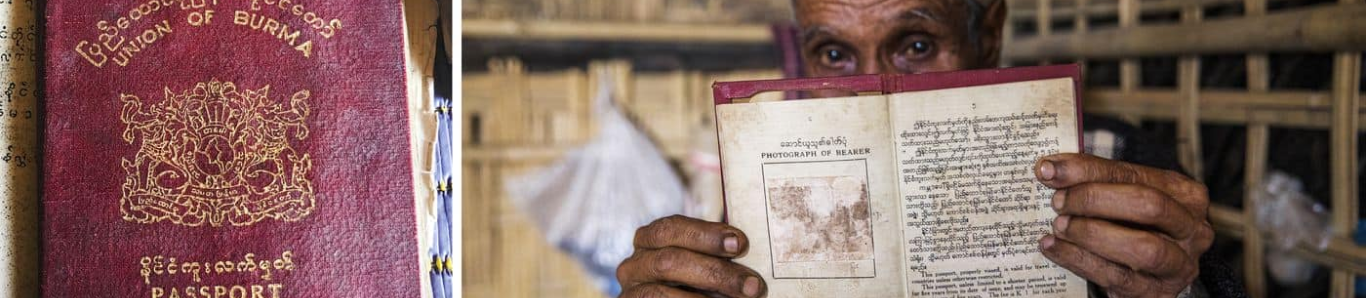
The Southeast Asia sub-region is predominantly characterized by civil registration–based identity systems, where birth registration forms the foundation for obtaining national identity documents and population registration numbers. Across Indonesia, Thailand, Viet Nam, Laos, Cambodia, and the Philippines, birth registration leads to the assignment of a personal identification number or entry into a population database. This is then used to obtain national ID cards later in life. Myanmar also assigns a National Registration Record Card from age 10 and Citizenship Scrutiny Card from age 18. Both identity documents require a birth certificate as a prerequisite document, although the system is ethnicity-based rather than universal.[2]
Across the sub-region, birth registration generally establishes legal identity, particularly in Indonesia, Malaysia, Singapore, Thailand, Timor-Leste, Viet Nam, Laos, Cambodia, and the Philippines. It leads to the assignment of a personal identification number or entry into a population database used later to obtain national identity documents. However, birth registration does not automatically confer citizenship, which is typically determined under nationality laws and proven through additional documents such as citizenship certificates, nationality documents, or specific categories of national identity cards. This distinction between proof of identity and proof of citizenship is particularly evident in countries such as Indonesia, Malaysia, the Philippines, Singapore, and Viet Nam, where national ID systems include residents or permanent residents who are not citizens. In countries such as Cambodia, Thailand, Timor-Leste, and Malaysia (for MyKad holders), national identity cards serve as proof of citizenship in addition to proof of identity.
Across the sub-region, countries have different approaches to providing legal identity documents to non-citizens and stateless persons. Singapore, Thailand, Malaysia, and Brunei, issue dedicated identity cards to at least some non-citizens and stateless persons. However, access for stateless persons varies significantly. Thailand’s pink ID card is explicitly available to stateless persons registered in the civil registration system, though many unregistered stateless persons remain excluded. Malaysia issues the MyKAS card to persons born to unknown or stateless parents. However, despite its existence, MyKAS holders continue to face widespread discrimination and significant barriers to accessing services. The card has also been criticized for entrenching rather than resolving statelessness. Singapore’s FIN is available to foreign nationals on long-term immigration passes and, in limited circumstances, to stateless persons holding equivalent passes. Yet, stateless persons without an immigration status cannot access it. Brunei’s purple card covers some stateless permanent residents but does not extend to stateless persons who have not obtained permanent residency. Viet Nam also issues an Identity Certificate to persons of Vietnamese origin with undetermined nationality, though like the documents above, this does not confer citizenship and its practical utility remains limited. On the other hand, Indonesia and Timor-Leste provide residence permits or special certificates that confirm a person’s right to remain in the country. However, these are neither equivalent to identity cards nor are they integrated into population registration systems. Stateless persons without any recognised legal status face barriers to obtaining even these more limited documents and are therefore frequently excluded from legal identity systems and public services altogether.
Overall, Southeast Asia’s legal identity systems are characterized by civil registration based identity frameworks and mandatory national ID systems. They also maintain a legal distinction between identity and citizenship. As a result, individuals may possess some identity documentation but still remain stateless. In such cases, they are unable to access full citizenship rights.
Table 1 – Primary Legal Identity Document and Application Requirements Across Southeast Asia
| Country | Primary Legal Identity Document | Documents Needed | Does Legal Identity Serve as Proof of Citizenship? |
| Brunei | Smart Identity Card (yellow for citizens; purple for permanent residents including some stateless persons; green for certain foreign nationals) | Birth certificate (required for both yellow and purple cards); for naturalized citizens, citizenship certificate; valid immigration/work passes for non-citizens | Only the yellow card certifies citizenship; purple and green cards evidence legal identity but not citizenship |
| Cambodia | National Identity Card (NID), issued to Cambodian nationals aged 15 and above; valid for 10 years | Birth certificate; civil registration records; NID is the official document confirming Cambodian nationality | The NID is the official document confirming Cambodian nationality under the 2023 Law on CRVSID; birth registration alone does not prove citizenship |
| Indonesia | e-KTP (electronic National Identity Card), compulsory for all residents aged 17+; birth certificate (Akta Kelahiran); family card (Kartu Keluarga) | Birth certificate; family card; biometrics; for foreign nationals, proof of permanent stay permit (KITAP) | Neither e-KTP nor birth registration automatically constitutes citizenship; citizenship is governed by nationality law |
| Laos | National ID Card (chip-enabled E-ID from 2015), tied to a Unique Identification Number (UIN) generated at birth registration | Birth registration generating UIN; civil registration documents; biometrics for E-ID | There is insufficient information to conclude whether the National ID Card constitutes proof of citizenship; sources suggest civil registration services can only be accessed by citizens in possession of the National ID card. It is unclear whether non-citizens can access the National ID card at all |
| Malaysia | NRIC: MyKad (citizens 12+); MyKid (children under 12); MyPR (permanent residents); MyKAS (temporary residents including persons born to unknown/stateless parents) | Birth certificate; parental documentation; immigration/residence documents; proof of citizenship for MyKad | MyKad is proof of legal identity and citizenship; MyPR and MyKAS document non-citizen statuses; birth certificate does not prove citizenship in itself |
| Myanmar | Citizens Scrutiny Card (CSC): pink (full citizens), blue (associate citizens), green (naturalized citizens); NVC for persons undergoing citizenship verification; TRC revoked February 2015, replaced by TAC; NVC (turquoise card) issued since 2016 for citizenship verification | Birth certificate; household list; parental documents; proof of ethnicity and ancestry; national language proficiency (for naturalized citizens) | The CSC evidences specific categories of citizenship; NVCs do not constitute proof of citizenship or formal identity; not all legal identity documents prove citizenship |
| Philippines | PSA Birth Certificate (foundational); PhilID/PhilSys Number (PSN) under the Philippine Identification System (PhilSys); ePhilID (printed digital version) | Birth certificate (or late registration documentation with affidavits); for PhilSys, birth certificate plus acceptable ID; for resident aliens, foreign passport and ACR/i-Card; late registration birth certificate has same legal effect as timely registration | PhilID/PSN is sufficient proof of identity but, by law, is not definitive proof of citizenship; citizenship is governed separately under Article IV of the 1987 Constitution |
| Singapore | NRIC for citizens and permanent residents (mandatory at age 15); FIN for foreign nationals on long-term passes | Birth certificate; proof of citizenship or permanent residence for NRIC; passport and long-term pass for FIN; Citizenship Certificate issued by ICA for proof of nationality | NRIC is proof of legal identity and citizenship or permanent residency, but not conclusive proof of citizenship, as permanent residents (who are non-citizens) can also obtain it; citizenship is established by a Singapore Citizenship Certificate |
| Thailand | Thai National ID Card (white with blue background) for citizens aged seven and above (for those under seven, identity is established via birth certificate, household registration book, or Thai passport); pink ID card for non-citizens including stateless persons | Birth certificate; household registration book (Blue Book, Thor Ror 14); civil registration records; certified civil records for pink card applicants | Thai National ID Card is proof of Thai citizenship; pink ID cards identify non-citizen or stateless legal status and do not confer citizenship |
| Timor-Leste | National identity card (Bilhete de Identidade), issued by the National Directorate of Registries and Notarial Services under the Ministry of Justice | Birth registration record (entered into civil registry); civil registration records supporting nationality; for foreign nationals, residence permit documentation | The national identity card serves as official proof of citizenship in addition to proving legal identity under Decree-Law No. 2/2004 on Civil Identification |
| Viet Nam | Citizen Identity Card (Căn cước công dân) for citizens aged 14 and above (ID cards can also be issued for children under 14 on request, as of 1 July 2024); Identity Certificate (Chứng Nhận Căn Cước) for persons of Vietnamese origin with undetermined nationality | Birth registration; entry in National Population Database; Personal Identification Number; supporting documents on nationality/origin | Citizen Identity Card evidences Vietnamese citizenship; Identity Certificate does not confer citizenship but enables access to education, healthcare, and basic services; birth certificate alone is not sufficient proof of citizenship |