flag

Bangladesh

Last updated : August 15, 2025

Digital ID Overview

overview_background_image

Digital Bangladesh, launched in 2009, is Bangladesh’s digital transformation program, which started the implementation of policies for the development of digital infrastructure and related public services. [7]Digital Bangladesh laid the foundation for the NID digital identification system [8]as well as the Bangladesh National Digital Architecture (BNDA), which allows the government to provide e-services to other government agencies, citizens, businesses and employees. [9]Schemes such as banking, telecommunications, social welfare, pensions, birth and death registration and food and development aid are all administered through the ‘National e-Service Bus’ introduced under the BNDA. [10]

The NID is a biometric, smart identity card with an embedded microchip which is only available to Bangladeshi citizens. [11]Originating from a voter database implemented by the Election Commission in 2008, upon voting, citizens were required to provide biometric data and eventually were issued NID cards with a microchip and unique 10-digit identification number. [12]The World Bank’s Identification for Enhanced Access to Services (IDEAS) Project from 2011 to 2018 provided technical assistance to the Election Commission and other agencies for laying a regulatory and policy framework as well as developing technology for the NID system. [13]Due to implementation delays of legal and policy frameworks, the project only achieved half of the target number of 90 million NID cards issued to citizens by 2018. [14]

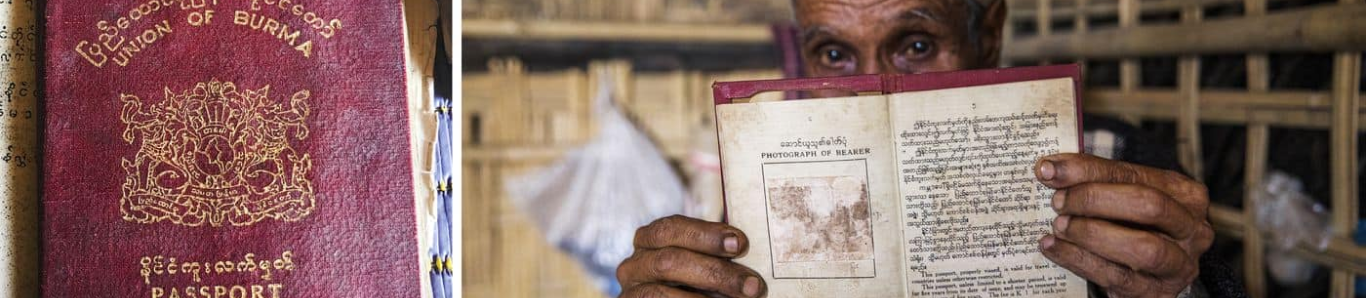
Source: Council of Minorities, Bangladesh

In 2023, the smart NID cards began being implemented as a foundational identity system. [15]The new NID system assigns a unique National Identification Number (NIN) to newborns, which will override the multitude of different ID numbers that caused confusion previously. [16]The same unique NIN assigned at birth will be used later on for the individual’s NID card number, consolidating to one unique identifier for an individual’s entire life. [17]

The NID is also used as a functional identity system. [18]While having an NID card will not be enforced as mandatory until all citizens have registered, [19]it is required to access “employment, land registration, passports, opening bank accounts, buying mobile SIM cards, electricity, water and gas connections and for other facilities”. [20]Other services linked to the NID system include social and government benefits, voting, taxpaying, and marriage registration. [21]The NID is also required in order to purchase rail tickets in Bangladesh. [22]

Documents required to apply for an NID include a birth certificate, a copy of a utility bill for address proof, a citizenship certificate, and photocopies of the NID cards of parents. [23]If relevant, the NID copy of one’s spouse, passport, and drivers’ license may also be required. [24]While not required, a Secondary School Certificate (SSC) or equivalent school exam pass certificate and Tax Identification Number (TIN) may also be used to certify a person’s identity. [25]It is important to note that while a birth certificate is a prerequisite for NID registration, [26]Bangladesh had a birth registration rate of only 83% in 2023. [27]

There have been reports of errors in the registration of NIDs, with many people receiving cards with inaccurate information on their card which has led to them being denied access to services. [28]In one case, an individual’s birth date was inaccurate on his card and, as a result, the family was unable to apply for an old age allowance which they depended on. [29]Brokers in Cox’s Bazar have also been reported forging NID cards, birth certificates and Bangladeshi passports for Rohingya refugees, some of which have been detained by police as a result. [30]In response, the government sought to gain access to UNHCR’s database of Rohingya refugees in the country to prevent them from obtaining Bangladeshi identity documents, to which UNHCR provided initial consent for. [31]

UNHCR has been issuing ID cards to Rohingya refugees since 2018 as a joint registration exercise in collaboration with the government. [32]The registration exercise’s main objective was to create a unified database with a consistent unique global individual and family identifier for all Rohingya refugees and to have a consolidated registration data from them including previously unregistered refugees from 1992. [33]A total 979,306 individuals from 203,271 families have been reported to have been registered till 30th April, 2024. [34]In the Rohingya camps, blockchain technology is being increasingly used for digital identification, as observed during COVID-19, when the World Food Programme (WFP) introduced the technology and served over 500,000 Rohingya refugees. [35]Through blockchain, WFP optimized resource allocation among multiple humanitarian organizations enabling quicker and more effective assistance delivery. [36]While different endeavours for digital identification in different domains have been taking place, the concerning factor is, due to lack of any coherent framework or regulation, sustainable implementation still remains a distant reality. [37]Additionally, Bangladesh’s recent move to hand over refugees’ digital identity information to the Myanmar authorities without first securing their consent has cast serious doubt on the database’s ability to safeguard confidentiality and maintain trust. [38]

Law

law_background_image

Domestic law and policy

Bangladesh does not currently have a comprehensive legal framework for its digital ID system.[39]The National Identity Registration Act (NIR Act), enacted in September 2023 includes plans to switch management and implementation of the NID system from the Election Commission to the Home Ministry. However, this transition has raised concerns that doing so would not be effective.[40] Election Commission officials, who believe the 2023 NIR Act should be canceled, have argued that it has had jurisdiction over the system for over a decade, meaning that it has the manpower and experience to operate it where the Home Ministry does not and that switching the system would be financially burdensome.[41] With increasing opposition from civil society and the Election Commission, the interim government repealed the NIR Act on 16th of January, 2025.[42]

In absence of the NIR Act, the National Identity Registration Act (2010) remains the primary legislation governing the NID system.[43]

The 2010 NIR Act provides that only citizens who are registered voters can obtain an NID card, and that not having a national ID card shall not infringe on the rights of citizens.[44] While this is a positive safeguard against exclusion for citizens, it does not prevent exclusion or protect the rights of stateless persons who do not have access to the digital ID system in Bangladesh and therefore, are unable to access the services attached to it.[45] To improve Bangladesh’s legal framework on digital ID, existing legislation should “be amended to include all significant facets of the ID system”.[46] To achieve this, the legislation should reflect mechanisms for addressing grievances, guidelines for government bodies and potential private actors, and details of “the rights and obligations of data subjects and administrators”.[47]

Data Protection

Under the 2010 NIR Act, biometric information collected for the voter ID database included fingerprints, hand geometry, palm prints, iris scans, facial recognition, DNA, signature, and voice.[48] The collection of DNA specifically has been widely criticized as “unjustifiable risks to privacy and discrimination,” going outside of the necessary means to achieve the purposes of the system. [49]

Currently there is no data protection law enacted in Bangladesh. The draft of the Personal Data Protection Act (PDPA) (2024), which was approved by the cabinet in November 2023 but did not get enacted, was criticized by civil society for failing to ensure the protection of personal data.[50] Rather than prioritizing the privacy and rights of users, the draft “continued to be a potential tool to legalize control of personal data by the Government”, creating space for increased government surveillance.[51]For instance, the draft Act included a list of exemptions for the protection of personal data including “for the prevention or detection of crime or for the purpose of investigations”.[52]This would have allowed for access to personal data with no “judicial controls or oversight, or without the requirement to provide justification for” access to the data, which raises serious data privacy concerns for data subjects.[53]In 2025, the Interim Government currently proposed another draft Data Protection Ordinance, 2025 which still contains vague and an expanded definition of “data fiduciary”,[54]continuing to provide discretionary powers to the National Data Governance and Interoperability Authority,[55]and suggesting a lack of judicial oversight over different government entities accessing personal data which could lead into potential misuse of personal data.[56]The wide scope delineated for the potential use of personal data by the government, as stipulated under section 28 [57]has raised concerns that the government will have unchecked and arbitrary access to personal data which could be used to control dissent.[58]In order to improve the protective elements of the legislation, the purpose of the law should clearly be to ensure rights are upheld rather than to create room for greater government control over personal data.[59]Further, in order to access data, judicial approval should be mandatory for access requests.[60].

In July 2023, 50 million Bangladeshi citizens’ personal data, including names, phone numbers, emails and national ID numbers, collected in the NID database were breached and publicly accessible on one of the websites of the 171 government partner organizations that use the data.[61]After two weeks of the data being accessible, the Bangladeshi government secured the website and database.[62]The data was reportedly leaked from Bangladesh’s Birth and Death Registration Information System.[63]In October 2023, another data breach occurred, with users’ names, parents names, gender, phone number, addresses, NID numbers, and other data made publicly available through a Telegram bot, which threatened some users’ personal safety.[64]To prevent this, information, communication and technology experts recommended that the Election Commission consistently surveil the 174 organization websites which use the NID server as well as regularly “conduct vulnerability and penetration assessments”.[65]Concerns have been raised by the former Election Commission Secretary, Shafiul Azim, that users’ data may be breached during the transition of the NID system from the Election Commission to the Home Ministry.[66]

International Commitments

As a party to the ICCPR, Bangladesh is obligated to protect the right to freedom of movement [67], which has not been upheld in the case of requiring NID cards in order to purchase rail tickets.[68]Similarly, the disproportionately low rates of birth registration among the Rohingya community [69]goes against the protection of the right of every child to be registered at birth under Article 24 of the ICCPR, which Bangladesh is a party to.[70]Consequently, since the laws related to digital ID are still under the parliamentary process, it is imperative that Bangladesh adheres to its human rights obligations under ICCPR, ICESCR, ICERD, CRC, and CEDAW .

Designed to Include?

The Impact of Digital ID and Legal Identity on Citizenship and Nationality Rights

background_image

By restricting NID card registration to Bangladeshi citizens,[71]non-citizens including refugees, migrant workers and stateless persons in Bangladesh are unable to access social and government benefits, employment, bank accounts, marriage registration, SIM cards, electricity, water, gas or rail tickets.[72]Furthermore, since a birth certificate is a necessary requirement to apply for citizenship, digitalization of birth registration has made the process of citizenship acquisition inaccessible to those who do not have access to internet or digital literacy.[73]As a result, those who are unable to access the process on their own must go through intermediary services to apply for citizenship, which increases the cost and creates another potential barrier to accessing the process.[74]With a birth registration rate of only 83% in 2023, the requirement of a birth certificate in order to register for the NID system also excludes 17% of the total population.[75]This disproportionately affects the Rohingya and Urdu-speaking communities, who experience lower rates of birth registration.[76]Local private entrepreneurs involved in the data entry process have been reported to charge informal fees for facilitating the data entry of an application for registration.[77]For the Urdu-speaking community, language barriers, structural discrimination and marginalization contribute to a lack of documentation, lack of legal identity, and poverty.[78]Digitalization exacerbates this, when coupled with issues with internet access and digital literacy.[79]

In order to foster greater inclusion in Bangladesh’s NID system, there should be a focus on ensuring “universal and free birth registration, particularly in remote areas and areas where minority communities live”.[80]Further, paper-based systems should also be accommodated to ensure access for those without internet access or digital literacy.[81]

5.^

Committee on the Elimination of Discrimination against Women, Concluding observations on the eighth periodic report of Bangladesh, 25 November 2016, CEDAW/C/BGD/CO/8, available at: https://tbinternet.ohchr.org/_layouts/15/treatybodyexternal/Download.aspx?symbolno=CEDAW%2FC%2FBGD%2FCO%2F8&Lang=en

32.^

Sharid Bin Shafique, ‘”Digital ID in Bangladesh refugee camps; A case study”, The Engine Room, https://www.digitalid.theengineroom.org/, https://digitalid.theengineroom.org/assets/pdfs/%5BEnglish%5D%20Bangladesh%20Case%20Study%20-%20DigitalID%20-%20The%20Engine%20Room.pdf, accessed 21st January, 2025

33.^

Registration and profiling’, unhcr, https://reporting.unhcr.org/registration-and-profiling-43, accessed 21st January, 2025

34.^

  Activity at a Glance, Office of the Refugee Relief and Repatriation Commissioner, Cox’s Bazar, 28 May 2024, <https://rrrc.portal.gov.bd/sites/default/files/files/rrrc.portal.gov.bd/notices/fb62c271_de6f_4bc7_bf38_f055e9034a96/2024-05-28-04-28-3c985e981c40c23b3d532d195c255733.pdf>, Accessed 23 January, 2025

35.^

“How blockchain is helping WFP’s fight against coronavirus in Bangladesh”, World Food Programme, 16 April 2020, accessed 24 January 2024 <https://medium.com/world-food-programme-insight/how-blockchain-is-helping-wfps-fight-against-covid-19-in-bangladesh-d2b466a8becf>

36.^

“How blockchain is helping WFP’s fight against coronavirus in Bangladesh”, World Food Programme, 16 April 2020, <https://medium.com/world-food-programme-insight/how-blockchain-is-helping-wfps-fight-against-covid-19-in-bangladesh-d2b466a8becf> , Accessed 24 January 2025. 

37.^

 Azfar Adib, “Time to make digital identity a nationwide reality”, Daily Star, 17 December, 2021, <https://www.thedailystar.net/views/opinion/news/time-make-digital-identity-nationwide-reality-2919206>, Accessed 24 January 2025.

38.^

“UN shared Rohingya data without informed consent”, Human Rights Watch, 15 June 2021, <https://www.hrw.org/news/2021/06/15/un-shared-rohingya-data-without-informed-consent>, Accessed 24 January 2025

54.^

Personal Data Protection Ordinance, 2025 (Draft), Section 2 (d) <https://ictd.portal.gov.bd/sites/default/files/files/ictd.portal.gov.bd/page/6c9773a2_7556_4395_bbec_f132b9d819f0/%E0%A6%AC%E0%A7%8D%E0%A6%AF%E0%A6%95%E0%A7%8D%E0%A6%A4%E0%A6%BF%E0%A6%97%E0%A6%A4%20%E0%A6%89%E0%A6%AA%E0%A6%BE%E0%A6%A4%E0%A7%8D%E0%A6%A4%20%E0%A6%B8%E0%A7%81%E0%A6%B0%E0%A6%95%E0%A7%8D%E0%A6%B7%E0%A6%BE%20%E0%A6%85%E0%A6%A7%E0%A7%8D%E0%A6%AF%E0%A6%BE%E0%A6%A6%E0%A7%87%E0%A6%B6%2C%E0%A7%A8%E0%A7%A6%E0%A7%A8%E0%A7%AB%20%E0%A6%8F%E0%A6%B0%20%E0%A6%87%E0%A6%82%E0%A6%B0%E0%A7%87%E0%A6%9C%E0%A6%BF%20%E0%A6%AD%E0%A6%BE%E0%A6%B0%E0%A7%8D%E0%A6%B8%E0%A6%A8%20%E0%A6%8F%E0%A6%B0%20%E0%A6%95%E0%A6%AA%E0%A6%BF%E0%A5%A4.pdf>

55.^

 Personal Data Protection Ordinance, 2025 (Draft), Section 2 (e)
<https://ictd.portal.gov.bd/sites/default/files/files/ictd.portal.gov.bd/page/6c9773a2_7556_4395_bbec_f132b9d819f0/%E0%A6%AC%E0%A7%8D%E0%A6%AF%E0%A6%95%E0%A7%8D%E0%A6%A4%E0%A6%BF%E0%A6%97%E0%A6%A4%20%E0%A6%89%E0%A6%AA%E0%A6%BE%E0%A6%A4%E0%A7%8D%E0%A6%A4%20%E0%A6%B8%E0%A7%81%E0%A6%B0%E0%A6%95%E0%A7%8D%E0%A6%B7%E0%A6%BE%20%E0%A6%85%E0%A6%A7%E0%A7%8D%E0%A6%AF%E0%A6%BE%E0%A6%A6%E0%A7%87%E0%A6%B6%2C%E0%A7%A8%E0%A7%A6%E0%A7%A8%E0%A7%AB%20%E0%A6%8F%E0%A6%B0%20%E0%A6%87%E0%A6%82%E0%A6%B0%E0%A7%87%E0%A6%9C%E0%A6%BF%20%E0%A6%AD%E0%A6%BE%E0%A6%B0%E0%A7%8D%E0%A6%B8%E0%A6%A8%20%E0%A6%8F%E0%A6%B0%20%E0%A6%95%E0%A6%AA%E0%A6%BF%E0%A5%A4.pdf>

57.^

 Personal Data Protection Ordinance, 2025 (Draft), Section 28.
<https://ictd.portal.gov.bd/sites/default/files/files/ictd.portal.gov.bd/page/6c9773a2_7556_4395_bbec_f132b9d819f0/%E0%A6%AC%E0%A7%8D%E0%A6%AF%E0%A6%95%E0%A7%8D%E0%A6%A4%E0%A6%BF%E0%A6%97%E0%A6%A4%20%E0%A6%89%E0%A6%AA%E0%A6%BE%E0%A6%A4%E0%A7%8D%E0%A6%A4%20%E0%A6%B8%E0%A7%81%E0%A6%B0%E0%A6%95%E0%A7%8D%E0%A6%B7%E0%A6%BE%20%E0%A6%85%E0%A6%A7%E0%A7%8D%E0%A6%AF%E0%A6%BE%E0%A6%A6%E0%A7%87%E0%A6%B6%2C%E0%A7%A8%E0%A7%A6%E0%A7%A8%E0%A7%AB%20%E0%A6%8F%E0%A6%B0%20%E0%A6%87%E0%A6%82%E0%A6%B0%E0%A7%87%E0%A6%9C%E0%A6%BF%20%E0%A6%AD%E0%A6%BE%E0%A6%B0%E0%A7%8D%E0%A6%B8%E0%A6%A8%20%E0%A6%8F%E0%A6%B0%20%E0%A6%95%E0%A6%AA%E0%A6%BF%E0%A5%A4.pdf>

67.^

International Covenant on Civil and Political Rights (adopted 16 December 1966, entered into force 23 March 1976) 999 UNTS 171 (ICCPR) art 12.

69.^

Committee on the Elimination of Discrimination against Women, Concluding observations on the eighth periodic report of Bangladesh, 25 November 2016, CEDAW/C/BGD/CO/8, available at: https://tbinternet.ohchr.org/_layouts/15/treatybodyexternal/Download.aspx?symbolno=CEDAW%2FC%2FBGD%2FCO%2F8&Lang=en

70.^

 International Covenant on Civil and Political Rights (adopted 16 December 1966, entered into force 23 March 1976) 999 UNTS 171 (ICCPR) art 24.

76.^

 Committee on the Elimination of Discrimination against Women, Concluding observations on the eighth periodic report of Bangladesh, 25 November 2016, CEDAW/C/BGD/CO/8, available at: https://tbinternet.ohchr.org/_layouts/15/treatybodyexternal/Download.aspx?symbolno=CEDAW%2FC%2FBGD%2FCO%2F8&Lang=en; ‘Joint Submission to the Human Rights Council: Universal Periodic Review: 44th Session - Bangladesh’ (n 69).