

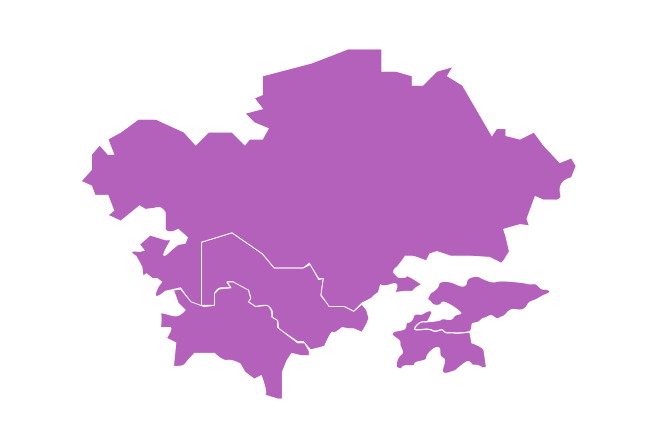
Across all five countries in Central Asia legal identity systems are built on civil registration, national identity documents, and residence registration systems, all of which are influenced by administrative structures inherited from the Soviet period.[1] In all countries in the sub-region, birth registration serves as the foundational legal identity document, while national ID cards (Kazakhstan, Kyrgyzstan, and Uzbekistan) or internal passports (Tajikistan and Turkmenistan) function as the primary proof of legal identity for adults. Additionally, they are required to access public and private services such as healthcare, education, banking, employment, voting, taxation, and social benefits.
The Central Asian countries operate a layered identity system in which birth registration establishes initial legal identity but must later be followed by issuance of national ID cards or internal passports. In all countries in the sub-region, national ID cards or internal passports are issued from the age of 16 and become the primary identity document used for most administrative and legal purposes.[2]
Birth registration is universal across the sub-region and is legally mandatory in all five countries. It is important to note that birth registration is accessible regardless of citizenship or residency status of the parents or child. This means that children of non-citizens, including stateless persons, are entitled to birth registration across the sub-region. However, birth registration alone does not constitute citizenship in any country in the sub-region; instead, it serves as the foundation upon which legal identity and citizenship documentation are later built. Citizenship is acquired by operation of nationality law; typically by birth, naturalization, or restoration; while identity documents serve as evidence of that status.
All countries in Central Asia provide specific legal identity documents for stateless persons. Kazakhstan, Kyrgyzstan and Turkmenistan issue Stateless Person Certificates, while Tajikistan issues certificates of stateless persons and residence permits. Uzbekistan allows stateless persons permanently residing in the country to obtain ID cards upon reaching the age of 16, subject to having resided in the country for at least five years and meeting citizenship application conditions (including recognition of the Constitution, knowledge of the state language, and renunciation of any foreign citizenship).[3]
Table 1: Primary Legal Identity Documents in Central Asia
| Country | Primary Legal Identity Document | Documents Required | Does Legal Identity Serve as Proof of Citizenship |
| Kazakhstan | National ID Card | Birth certificate, Individual Identification Number | No |
| Kyrgyzstan | National ID Card/Internal Passport | Birth certificate, PIN, proof of parents’ citizenship | No |
| Tajikistan | Internal Passport/Electronic ID Card | Birth registration and other documentation (as required) | No |
| Turkmenistan | Internal Passport | Birth certificate and residence registration | No |
| Uzbekistan | ID Card/Passport | Birth certificate and other documentation (as required).[4] | Yes (ID card confirms citizenship)[5] |