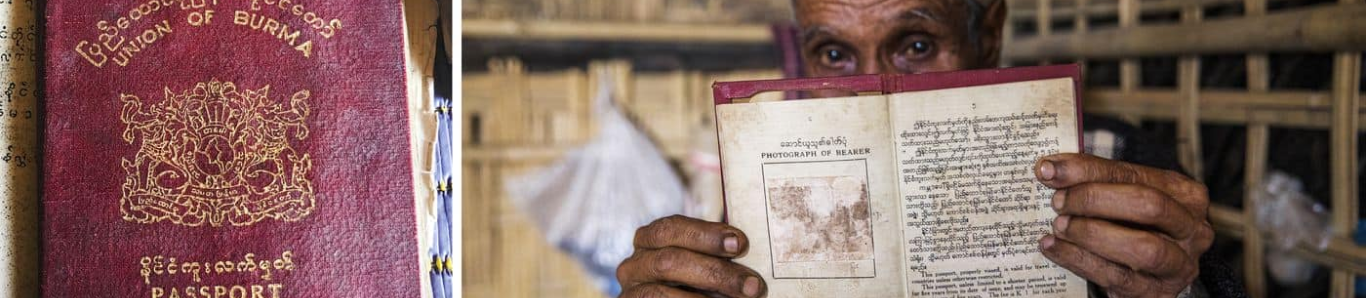
Available information does not indicated that the introduction of the Unique Identification (UID) Smart Card has contributed to reducing statelessness. It is possible that it has reinforced and institutionalized the exclusion of stateless populations from legal identity and access to essential services.[66]
For stateless persons, like the Rohingya community in particular, the UID system continues the administrative exclusion they have faced. Digital identity initiatives have not altered the legal and policy foundation in the country. United Nations bodies and independent fact-finding missions have repeatedly identified the denial of citizenship and identity documentation as a core element of the persecution of the Rohingya.[67] The denial or revocation of digital ID in Myanmar does not directly cause statelessness in a legal sense, but it functions as a mechanism of exclusion that entrenches statelessness. Without access to the UID, stateless individuals are unable to access a wide range of state-sponsored services, including – healthcare, education, formal employment, travel permits, banking and financial services, SIM card registration and public benefits and pensions.[68]
While the government promotes the NVC as a pathway to citizenship, in practice, it has failed to guarantee any citizenship rights.[69] Those who are documented are often required by the government to obtain an NVC as a prerequisite for further scrutiny, even when they may qualify for a Citizenship Scrutiny Card.[70] For Rohingya particularly, UN agencies, international NGOs, and Rohingya civil society groups have documented that possession of an NVC has not resulted in citizenship, security of status, or protection from abuse, but has instead functioned as a tool of population control and data extraction.[71]
As of 2025, there is no public evidence that the government has undertaken special measures to ensure access to digital ID for vulnerable or isolated communities, such as stateless persons, persons with disabilities, or the elderly. There is no available information about mobile registration units, legal aid programs, or policy provisions aimed at facilitating inclusive access and the system as a whole remains centralized, opaque, and exclusionary.[72] This absence of safeguards has particular consequences for the Rohingya, many of whom lack freedom of movement, face language and literacy barriers, and reside in camps or segregated villages under heavy surveillance.[73] No credible evidence indicates that Rohingya holding Temporary Registration Cards (TRCs), Temporary Approval Cards, or NVCs are eligible for UID enrolment, nor that UID issuance could override their exclusion from citizenship.
Additionally, since the 2021 coup, human rights reports indicate that the National Unity Government has used digital technologies to carry out mass surveillance, identify dissent and target opposition movements.[74] The violation of right to privacy also exacerbates discrimination against ethnic and religious minorities, women, LGBTIQ+ communities, persons with disabilities, older persons, and other marginalised groups.[75] Therefore, the digital ID infrastructure can potentially be used to further target individuals, including stateless persons.
To improve the system, Myanmar would need to enact a comprehensive data protection law aligned with international human rights standards. The state should establish independent oversight mechanisms for digital ID governance and ensure non-discriminatory access to digital ID, regardless of ethnicity, religion, or citizenship status.[76] In addition, introduce legal pathways for stateless individuals to obtain identity documentation and access services.[77] Furthermore, implement safeguards against surveillance and misuse, such as judicial oversight of data access and prohibitions on profiling individuals.[78] Lastly, the government should provide accessible grievance mechanisms for individuals denied ID or services, including appeals processes and legal aid.[79]